

 JOIN and enjoy exclusive benefits!


Lisbon, a beautiful city from head to toe
05/02/2025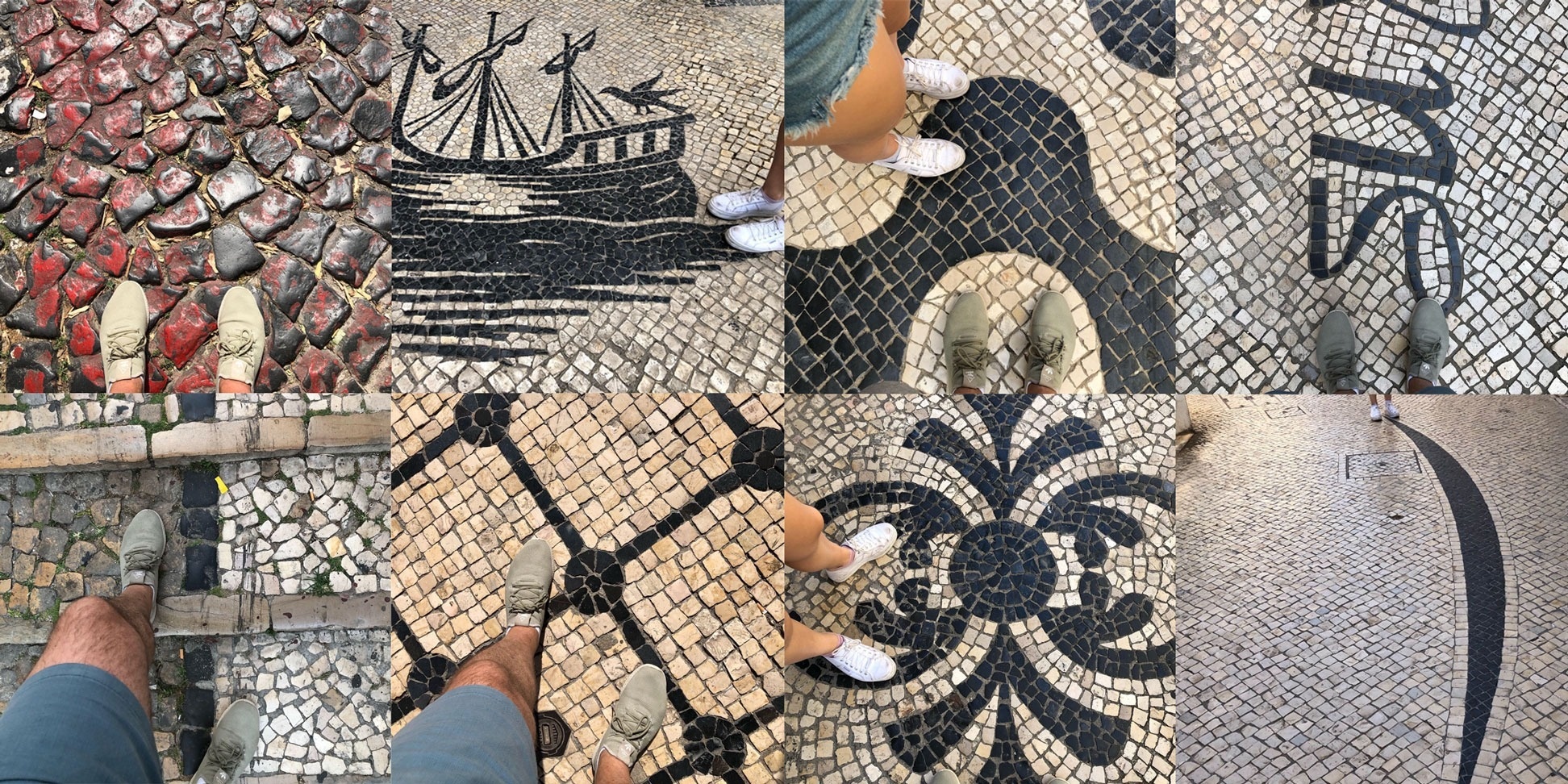
When you visit Lisbon, one of the things that most surprises you is its typical sidewalks paved with black and white cobblestone mosaics.
These stone floors, one of the most emblematic jewels of the Portuguese capital, have become an unavoidable attraction for those lucky enough to walk on them.
Portuguese cobblestone, known as "calçada portuguesa," is an art in itself. Made from irregular stones, usually limestone or basalt, they are meticulously arranged to form intricate decorative patterns.
This type of paving has its roots in the 15th and 16th centuries, but it was the devastating earthquake of 1755 that marked a turning point in its history. The city was left in ruins, and the Portuguese paving technique, due to its complexity and cost, fell into disuse during the arduous reconstruction phase. However, like a phoenix rising from the ashes, Portuguese paving found its redemption in the 19th century, specifically in 1842.
The push to revive this ancient tradition was led by Lieutenant General Eusébio Pinheiro Furtado , who led prisoners in the paving work under his command as Governor of Arms of São Jorge Castle.
What began as a simple zigzag path evolved into something unusual and revolutionary for its time. Praça do Rossio was one of the first areas to experience the art form's revival, and its popularity quickly spread throughout the city and beyond, even reaching the Portuguese colonies.
It's important to recognize the work of the "calceteiros," as the artists and pavers who carry out this meticulous task are known in Portuguese. Their dedication and skill in bringing intricate designs to life deserved a tribute, and so, in 2006, a monument to the "calceteiro" was erected in front of the Church of Saint Nicholas, on Rua da Vitória in Lisbon. This monument is an eternal reminder of their talent and contribution to Lisbon's cultural identity.
Book your stay: Casual Belle Epoque Lisbon .
These stone floors, one of the most emblematic jewels of the Portuguese capital, have become an unavoidable attraction for those lucky enough to walk on them.
Portuguese cobblestone, known as "calçada portuguesa," is an art in itself. Made from irregular stones, usually limestone or basalt, they are meticulously arranged to form intricate decorative patterns.
This type of paving has its roots in the 15th and 16th centuries, but it was the devastating earthquake of 1755 that marked a turning point in its history. The city was left in ruins, and the Portuguese paving technique, due to its complexity and cost, fell into disuse during the arduous reconstruction phase. However, like a phoenix rising from the ashes, Portuguese paving found its redemption in the 19th century, specifically in 1842.
The push to revive this ancient tradition was led by Lieutenant General Eusébio Pinheiro Furtado , who led prisoners in the paving work under his command as Governor of Arms of São Jorge Castle.
What began as a simple zigzag path evolved into something unusual and revolutionary for its time. Praça do Rossio was one of the first areas to experience the art form's revival, and its popularity quickly spread throughout the city and beyond, even reaching the Portuguese colonies.
It's important to recognize the work of the "calceteiros," as the artists and pavers who carry out this meticulous task are known in Portuguese. Their dedication and skill in bringing intricate designs to life deserved a tribute, and so, in 2006, a monument to the "calceteiro" was erected in front of the Church of Saint Nicholas, on Rua da Vitória in Lisbon. This monument is an eternal reminder of their talent and contribution to Lisbon's cultural identity.
Book your stay: Casual Belle Epoque Lisbon .